Kindergarten
Fall Math Set
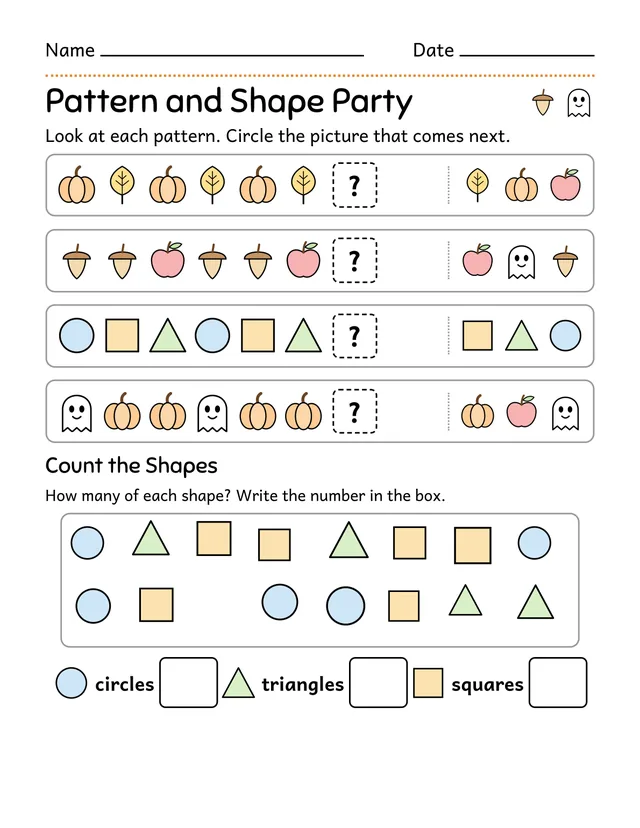
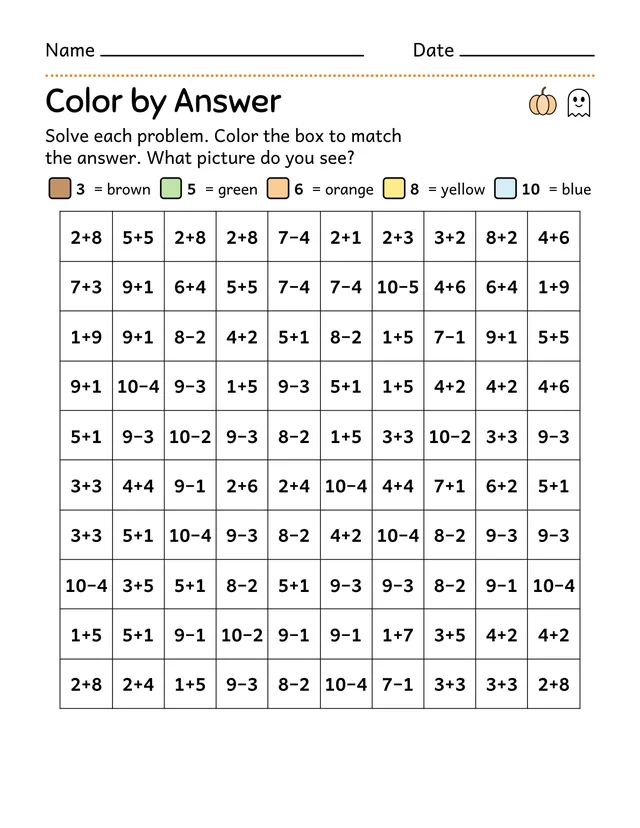
Pumpkin-patch math, patterns, fall story problems and a color-by-answer picture. 5 pages.
Download PDFI’m Juno, a red-crowned kakariki parrot. Text me about your child, and I’ll make a printable worksheet pack with their name, their level and the things they love, so they stay excited and ask for the next one.
Text Juno
Psst! No app and no account.
Four easy steps. Check each box as you go!
Their first name, grade or age, what they’re into, and anything they need more practice on.
Juno makes a US Letter PDF for math, reading, science or a mix. The answers come to you separately.
It works double-sided, with big clear type, short read-aloud instructions and a Name and Date line on every page.
The next pack adapts to what your child is ready for.
Juno builds every pack from the same skill maps teachers and learning researchers use. They cover thousands of small, step-by-step skills tied to what your kid’s grade covers at school. When you text a photo of a finished sheet, Juno sees which skills clicked and which need another try, and the next pack works on the right next step.
No guesswork, no busywork.
Skill maps from the Learning Commons Knowledge Graph (Chan Zuckerberg Initiative) and Marble’s OS Taxonomy.
You can! Those tools are great at drafting a page. I make the sheet a kid can actually write on, print, and finish — with no prompting or fiddling from you. Just text.
Tap to enlarge
Tap to enlarge
Before a pack goes out, every math answer is checked by a script, and every page is looked at. The pictures are ones a kid can name at a glance. Each pack follows Juno’s month-by-month pacing for that grade.
Text back a photo of the graded pages, and the next pack follows what clicked. These pages have been printed and tried with real kids.
Juno keeps a month-by-month pacing map for every grade, TK through 8th, covering math, reading and writing, and science. It’s built from Common Core for math and English, the Next Generation Science Standards, and California’s TK learning foundations, and timed to the unit order the most common school math and reading programs follow.
Most of each pack is what that grade is usually learning right now. About a quarter is review, plus your kid’s own weak spots, and a little preview of what’s next. Graded photos you text back fine-tune it for your kid.
2nd grade math, month by month
In mid-November, 2nd graders are usually adding and subtracting two-digit numbers with regrouping, so that’s what their pack practices.
Not sure what to write? Fill in the blanks, then tap Text Juno.
Real packs Juno made, with a made-up name on them. Pick a grade, download one and print it to try.
Pumpkin-patch math, patterns, fall story problems and a color-by-answer picture. 5 pages.
Download PDF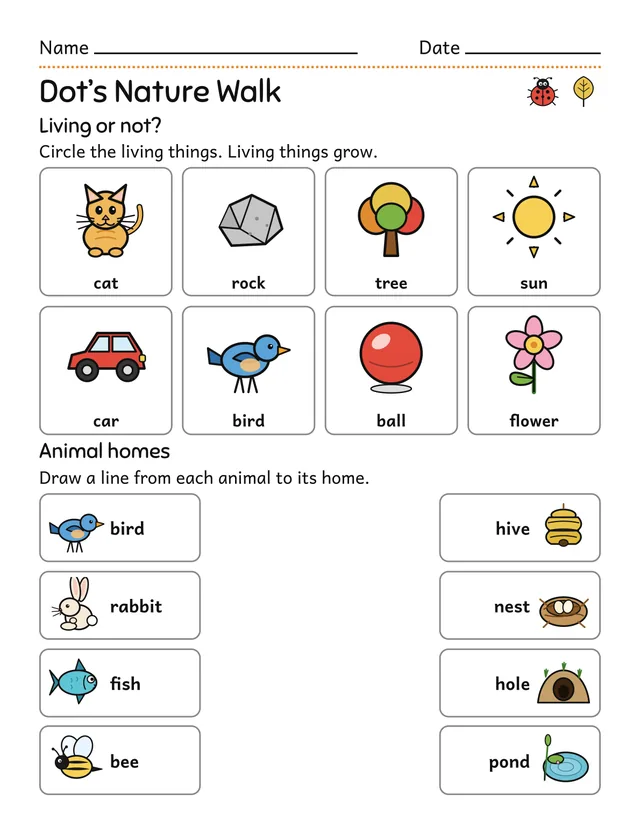
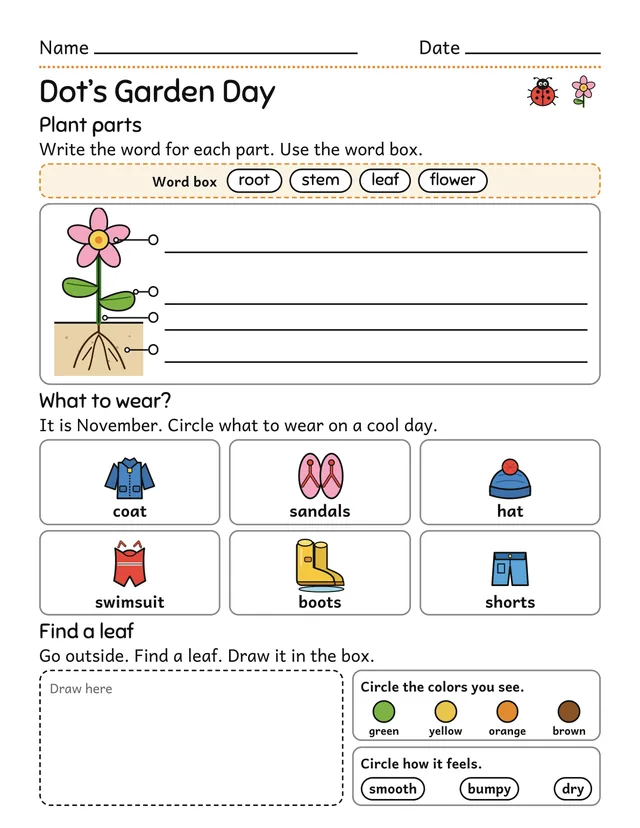
Living or not, animal homes, plant parts and what to wear. 2 pages.
Download PDF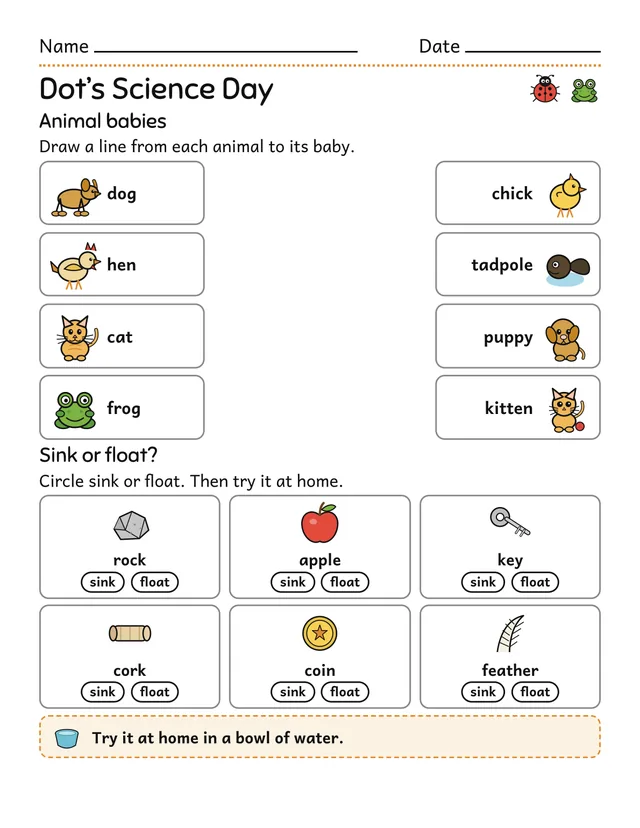
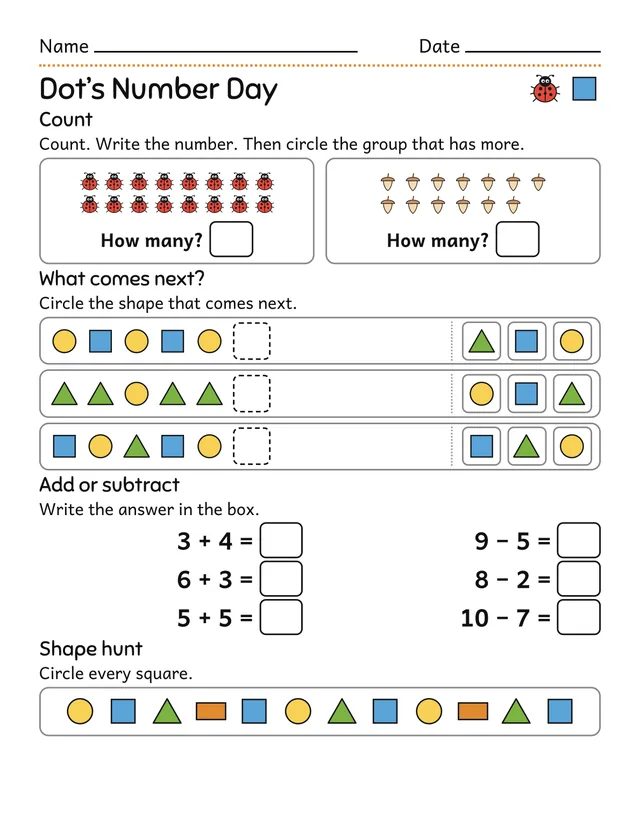
Counting, adding, first letters, sight words and sink or float. 4 pages.
Download PDF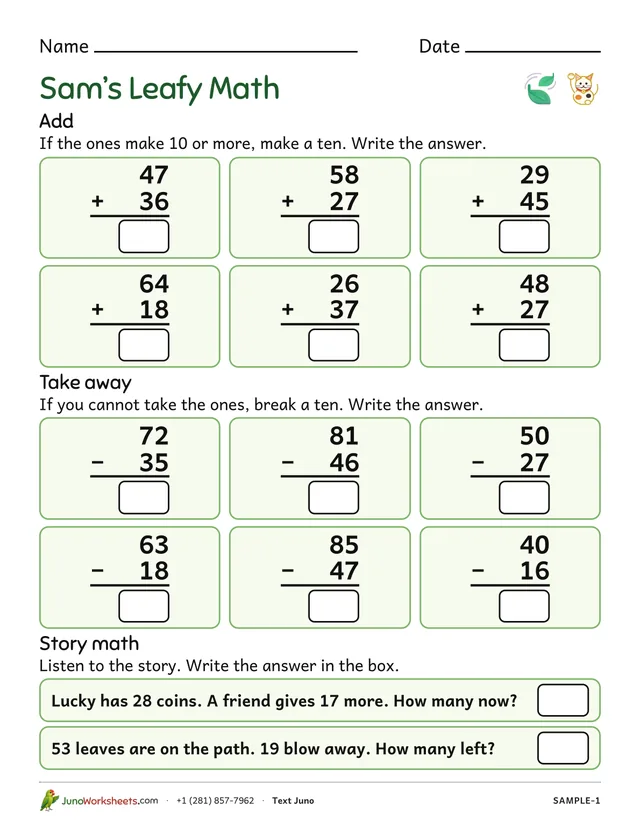
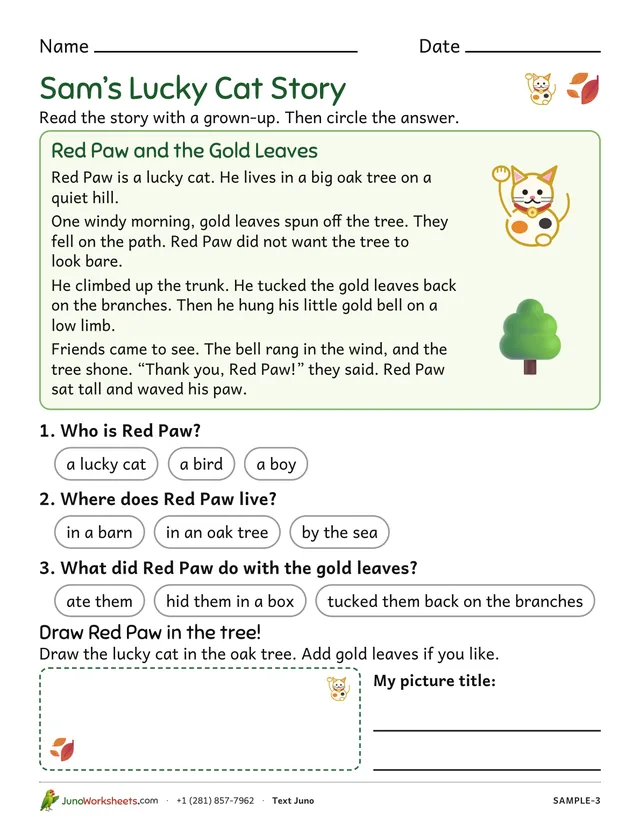
Adding and subtracting within 100, place value to 1,000, a lucky-cat story, vowel teams, and parts of a tree. 4 pages.
Download PDF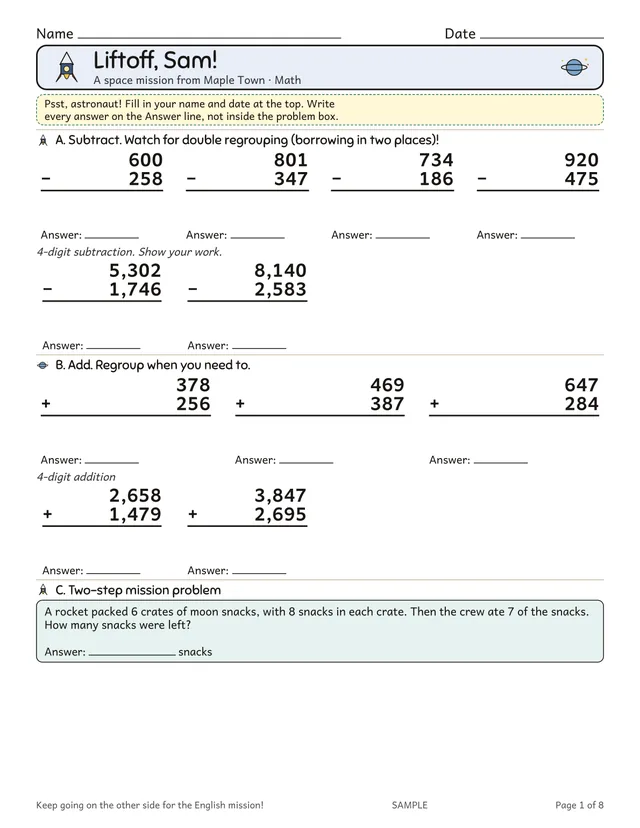
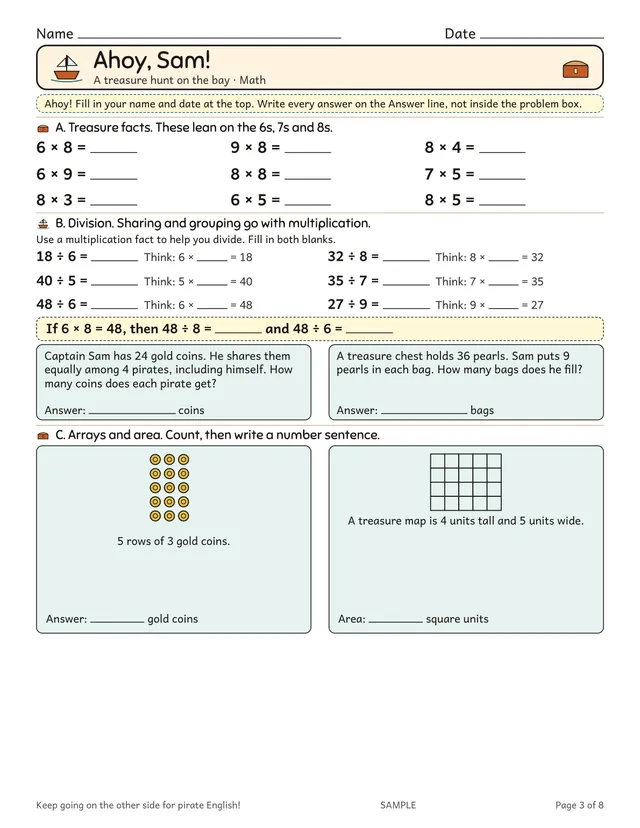
Space, pirates, soccer and a campout, with math and English in each adventure. 8 pages.
Download PDF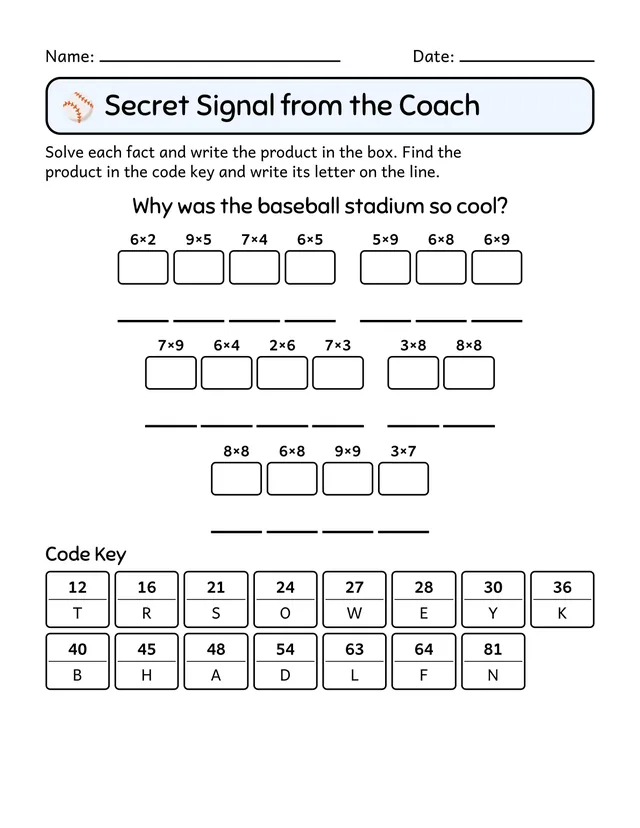
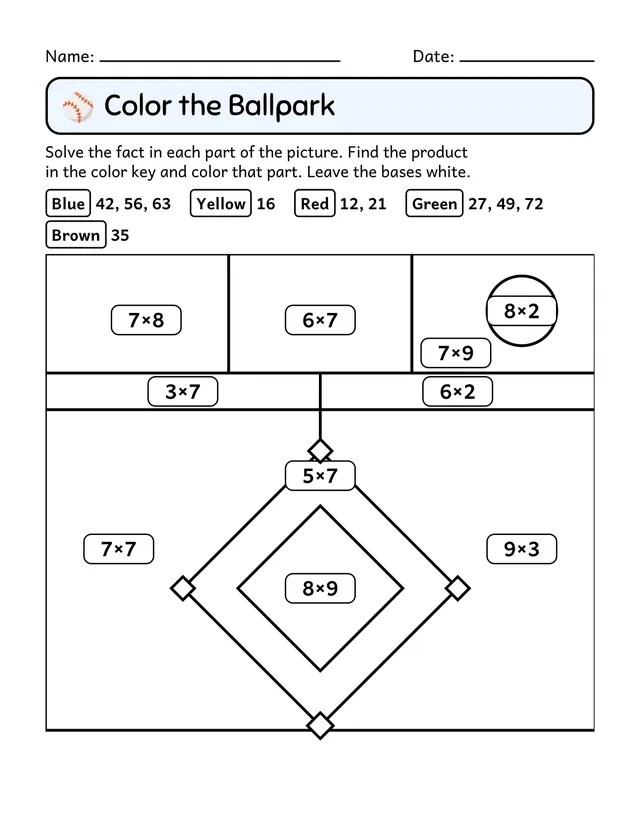
Baseball-themed times tables, a coach's riddle and a color-the-ballpark sheet. 6 pages.
Download PDF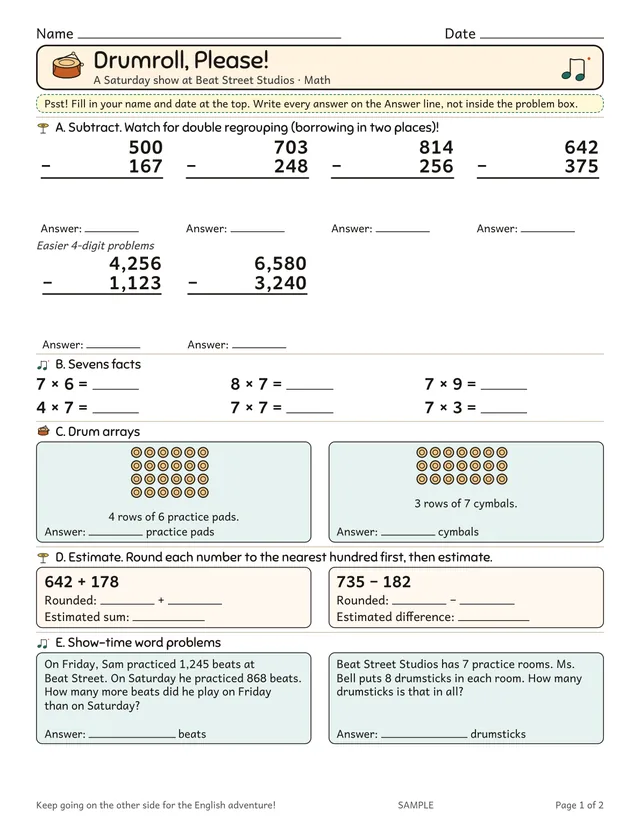
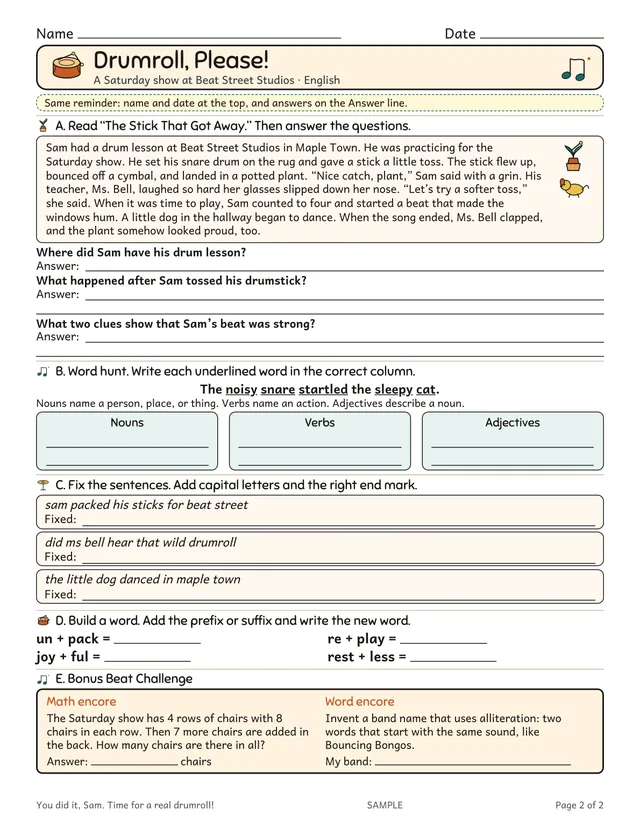
Regrouping, sevens facts, arrays and a drum-lesson story. 2 pages.
Download PDFText Juno (works with iMessage and regular text messages). Tell me your kid’s grade and what they like, and I’ll send a private link to a printable PDF.
Yes! Juno works with regular text messages too, so any phone can text Juno. Packs come as a link you tap to open and print.
TK through 8th grade.
Math, reading, science, or a mix. You can pick a theme they love, too.
Juno keeps a month-by-month pacing map for every grade, TK through 8th. It’s built from Common Core, the Next Generation Science Standards, and California’s TK learning foundations, and timed to the unit order the most common school math and reading programs follow. Most of a pack is what that grade is usually learning right now, plus some review, your kid’s weak spots, and a little look ahead. Graded photos you text back fine-tune it for your kid. See this month’s pacing.
You can! Those tools are great at drafting a page. I make a sheet a kid can actually write on, and I check it before it goes out. See the comparison higher up on this page.
Yes. It’s kept to your family. Pack links are private and aren’t listed on the site.
Just ask after the pack arrives. I’ll send it as one picture.
Packs are free while we’re testing.